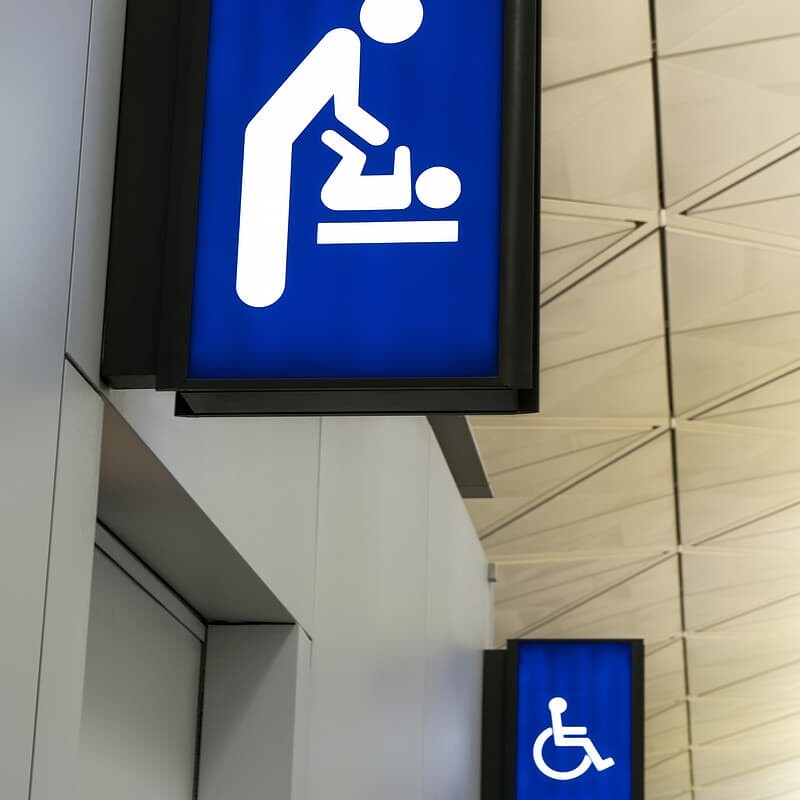
The connection between the availability and access of public washrooms and people’s ability to participate in society has been established for nearly two centuries, but should local authorities be required by law to provide and maintain public toilets?
A recent letter from Caroline Russell AM, Member of the London Assembly, called for the provision of public toilets to be a statutory duty that all local councils had to fund, construct and maintain.
Everything from the cubicle partitions to the land and plumbing requirements would shift from being a recommendation to being a requirement, with a dedicated ringfenced budget to ensure it could be achieved at a county, city and borough level.
Whilst not the first call for public toilets to be a statutory duty, it is a comprehensive case during a time when so many public washrooms are at risk of closure to the point that businesses in Scarborough have been asked to open their facilities to non-customers, according to the BBC.
Should it be a legal responsibility for councils to provide public washrooms? Here are the cases for and against.
Do Local Councils Have A Responsibility To Maintain Public Washrooms?
As the British Toilet Association notes, it is the responsibility of local authorities to provide public toilets, but this provision is optional, and during periods of budgetary strain, they are one of the first public services to be cut.
The BTA notes that two-fifths of Britain’s public toilets have been closed over the past 25 years, with these closures accelerating in the 2010s due to the particularly acute strain local authorities were under due to austerity measures.
Because they were not a requirement, these toilets were either closed outright or were no longer maintained, making them less comfortable or safe to use.
Why Have Public Washroom Numbers Been Decreasing?
One of the biggest reasons for lower numbers of public washrooms has been public funding issues, which have also led to the mothballing and closures of libraries, subsidised bus routes and other provisions that a local council is not legally required to provide.
These reductions often operate gradually; it typically begins with the cancellation or reduction of scope for installing new public washrooms, such as Changing Places toilets.
After this, it progresses to reducing maintenance hours or replacing components at lower rates than was previously the norm. This progresses to reducing opening hours, charging for admission and finally closing them entirely.
Another aspect of this is the expectation that businesses and the private sector provide public toilets either by funding them through public-private partnerships or by opening up their washrooms for paying customers to the general public.
Why Should Local Councils Be Forced To Provide Public Toilets?
Everyone needs to visit a washroom; it is as basic a human need as breathing, eating and drinking. However, whilst there are provisions to ensure clean air in cities, water stations to fill up water bottles and local and national policies to reduce hunger and food poverty, public facilities have been decreasing.
The consequences of a lack of public washrooms are well-known; the loo leash is a phenomenon that has been the target of social reform and feminist movements for nearly two centuries.
Here are some of the biggest reasons why local councils should have a statutory duty to provide public washrooms:
It Is An Equality Act Issue
The Equality Act 2010 is a broad anti-discrimination law that requires both private sector businesses and public sector organisations to avoid discriminating based on protected characteristics.
People who may have an urgent need to use services that are the responsibility of the public sector, such as public toilets, must take into account the needs of people who need them the most.
According to the BTA, 16 million people in the UK have a registered disability and thus need accessible toilets, 15 million people menstruate and would need a washroom to safely dispose of and change sanitary products, and 14 million people deal with a condition which causes incontinence.
All of these people are indirectly discriminated against by inadequate public washroom facilities, and it causes them to have to plan any journey, event or activities based on whether they trust there is an accessible toilet nearby.
The Costs Are Offset By The Benefits
The BTA starkly suggested that a lack of public washrooms in the London district of Soho cost the area nearly £5m in lost revenue, as people could not comfortably travel, enjoy themselves and spend money around one of London’s most fashionable areas.
By contrast, having more accessible toilets can generate an additional 30 per cent footfall, which translates to more people shopping, eating, drinking and enjoying themselves.
Related Posts