
Those whose job is to procure equipment for washroom facilities need to take into account exactly who their users are. Among those who might need to be more up-to-date with their planning in this regard are construction site managers.
Of all the professions in the UK, construction has been among the most traditionally male-dominated. From the muscle required to lift heavy loads to the stereotypes about the ‘brickie’s bum’, it has always been seen as the most masculine of environments.
However, that stereotype has increasingly come under challenge. According to the Office for National Statistics:
- In the second quarter of 2026, 305,850 women were working in the construction sector
- This included 274,231 employees and 31,619 self-employed women
- This accounted for 15 per cent of the total construction workforce
This level of female involvement might have been unthinkable back in the day, but has been fairly steady over the last 20 years. For that reason, one might have expected that site managers would be aware of the need to provide adequate facilities, including washrooms.
How Bad Is Construction Site Washroom Provision For Women?
However, as Construction News reports, it appears this is not the case, with female employees enduring major inadequacies in provision.
This revelation came from a survey by Release the Bogs, a campaign group aiming to improve facilities on construction sites across the UK.
Its survey of 633 sites found that 61.4 per cent of women had restricted their fluid consumption during the working day to reduce the need to use the washroom, because of inadequate facilities.
At the same time, it was not as if everything was fine for men, with 39.4 per cent restricting their fluid intake for the same reason.
Further findings revealed that:
- 10.1 per cent of women have considered leaving the sector because of the lack of washroom facilities
- 8.8 per cent of men have considered quitting for the same reason
- 72.5 per cent of women had left the site to find facilities elsewhere
- 75.8 per cent of men had done likewise
- Only 39.5 per cent of women and 39.3 per cent of men had found toilet cubicles had functioning locks.
- Only 34.6 per cent of respondents said that sanitary facilities were provided in women’s toilets.
- Worst of all, only 8.9 per cent of women said toilets were always available, compared with 60.5 per cent of men.
How Can Firms Comply With The Law On Construction Site Toilets?
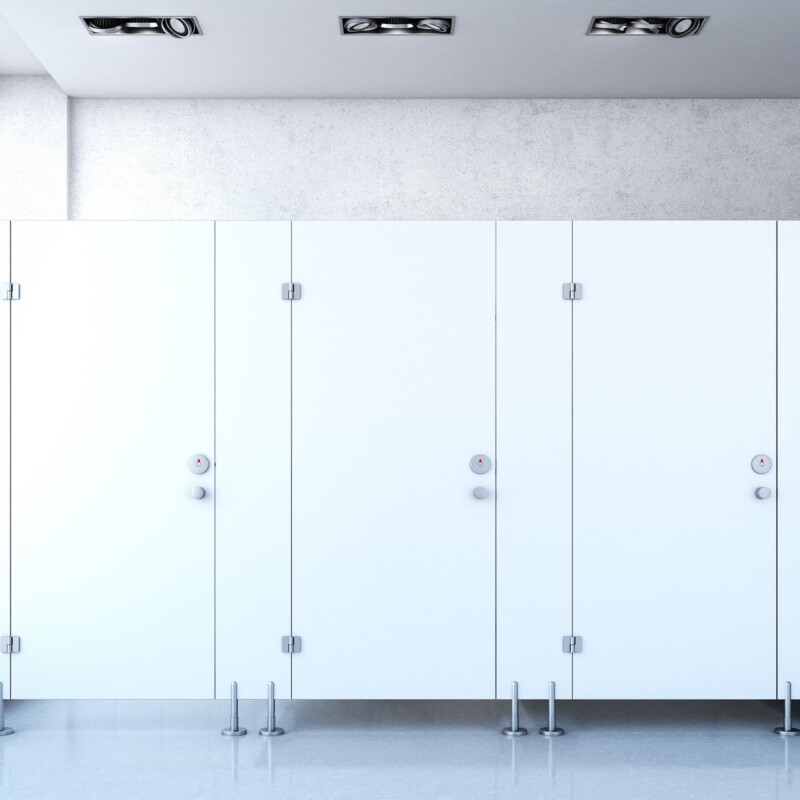
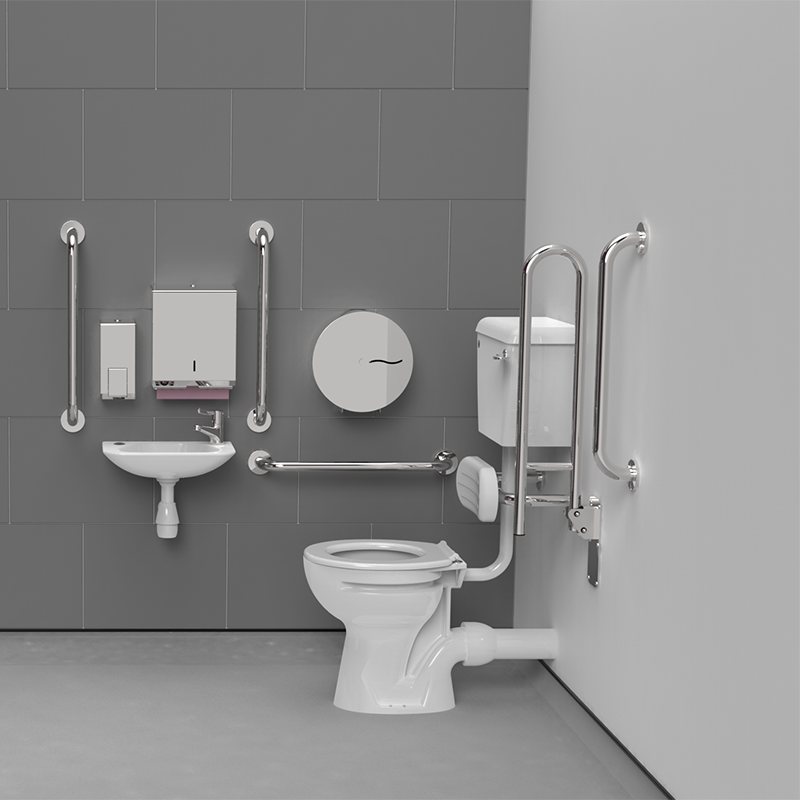
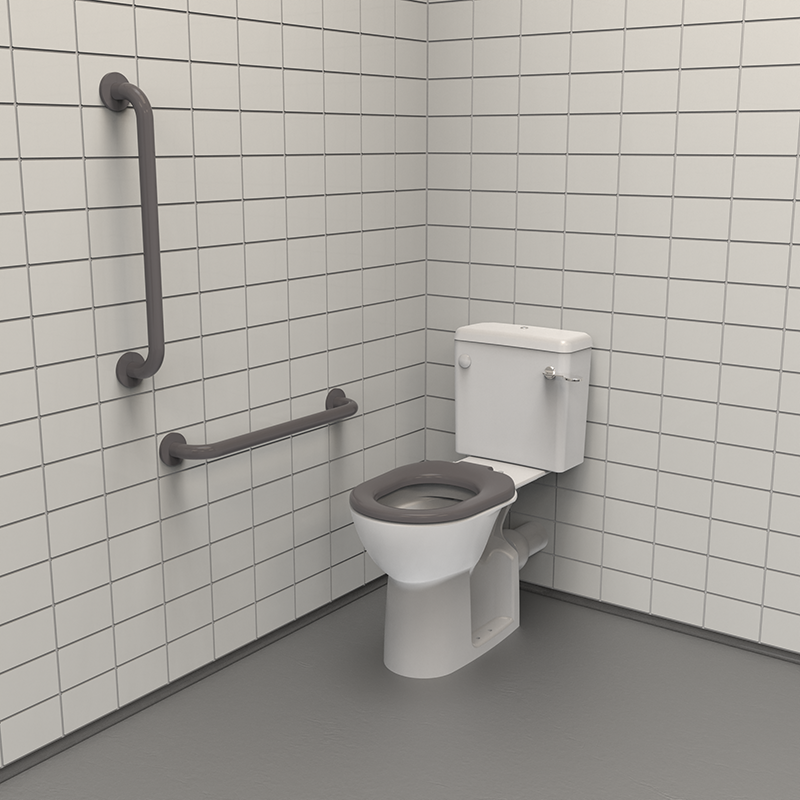
Such findings paint an alarming picture, but it is one that site managers could resolve by taking steps to invest in something simple like working flat pack toilet cubicles, complete with functioning locks and the necessary sanitary facilities for female staff.
The level of failure can be highlighted by the fact that in many cases, the inadequacy of washroom facilities can be unlawful.
Under the Construction (Design and Management) Regulations 2015, ‘suitable and sufficient toilets’ must be easy to access, with the sole or principal contractor having responsibility to ensure these are in place.
Moreover, Health and Safety Executive guidance states that, when women are on site, sanitary waste disposal facilities must be provided.
Commenting on the situation, construction worker Katy Robinson, who conducted the research, said: “Contractors are not meeting minimum standards – and standards are not high enough anyway.”
She added: “It’s frustrating as there’s such a simple solution – provide site toilets, ensure they are cleaned and maintained and have sufficient consumables and provisions in place.”
Some might suggest that construction is an outlier when it comes to shortcomings in washroom facilities, partly because of the impermanence of construction sites as workplaces in comparison to fixed locations like offices or hospitals.
Why Is A Train Drivers’ Union Concerned About Washroom Provision?
However, there are other industries in which such problems appear to exist, such as the railways.
The Guardian recently reported that the train drivers’ union Aslef is considering strike action over a lack of access to facilities for drivers.
A 2024 union survey had revealed that many had been unable to reach working washrooms on trains or at stations and had been forced to take actions such as urinating in bottles.
Last year, the union put the industry ‘on notice’, but has now complained that not enough action has been taken in the meantime by train operators to fulfil their legal obligations.
In common with the situation highlighted on construction sites by the Release the Bogs report, many drivers were hydrating less in response to the problem, with female drivers affected worse than men.
Aslef has warned that dehydration risks both driver and passenger safety.
These issues highlight the need for those responsible for washroom provision to take steps to ensure that these are available in all workplaces, not just those in established buildings
Related Posts