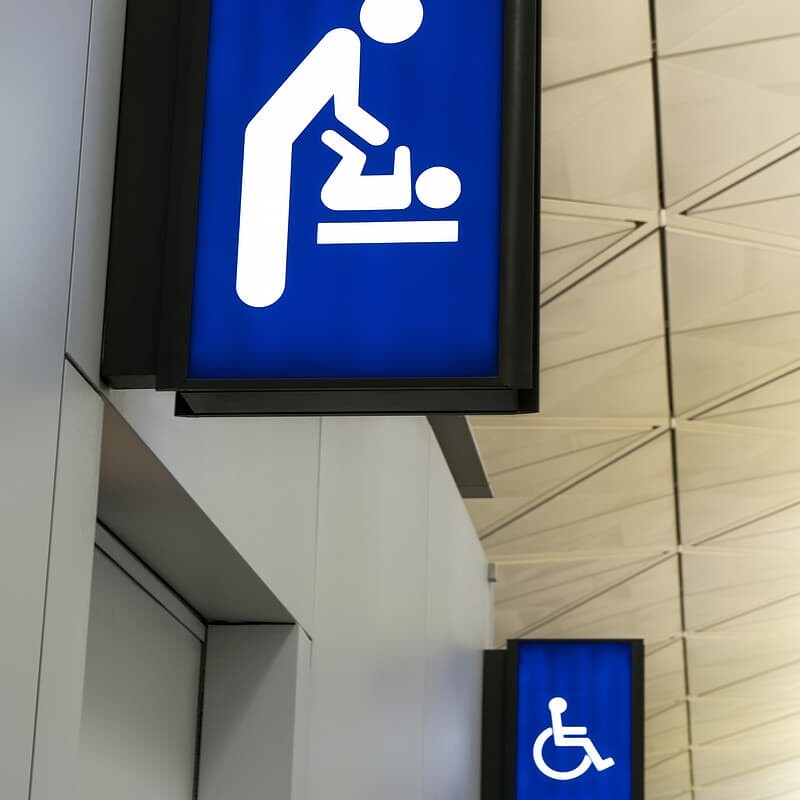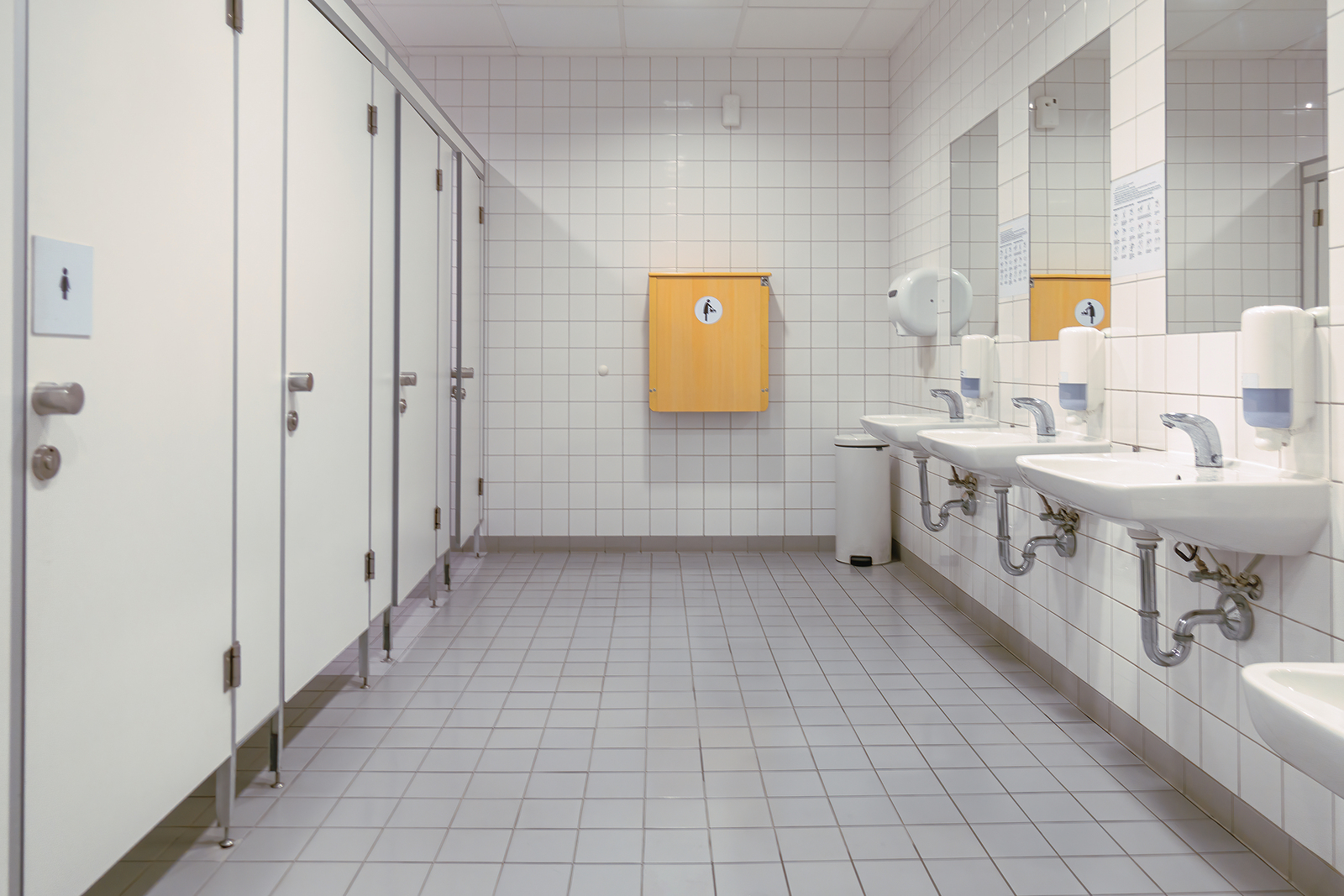

As with other major suppliers in the washroom industry, we are passionate advocates for the widespread access to high-quality public washrooms with enough toilet cubicles to enable anyone to enjoy any public venue they like without needing to plan around access.
According to a report by BBC News, we are far from the only ones; a councillor on Peterborough City Council, Raja Sabeel Ahmed, noted that a lack of public toilets was a “major issue” for people in his constituency, given a relative lack of public toilets in the city centre.
This is far from a new issue, and discussions of the so-called “loo leash” have been discussed passionately for the better part of two centuries, with the Great Exhibition of 1851 being the first flashpoint of washroom inequality.
But whilst we intuitively understand that we need enough public washrooms that provide the right level of hygiene, privacy and safety, it is always important to explore the reasons why this is so important.
What Are The Economic Benefits Of Installing Public Washrooms?
One of the most common misconceptions that we hear when it comes to installing washrooms for the public is that there is no economic case to make outside of legal requirements to have toilets in a public-facing building.
There is a logic to this, in a “know the price of everything and the value of nothing” way. After all, toilets need to be maintained and kept immaculately clean, something that means greater expenses on staff and supplies.
As well as this, any space used for toilets is seen as taking away from space used to generate revenue, with more washrooms equating to less space on the shop floor, nightclub space or storage room for inventory.
However, this is offset significantly by the benefits of access to plentiful safe sanitation; according to a study cited by the World Bank, every pound spent on sanitation returns over four pounds back, a phenomenon known as the “sanitation dividend”.
There are many reasons for this, but the main benefits are:
- Reduced anxiety over toilet access, which incentivises travelling to a retail location or workplace and reduces the risk of illnesses caused by a lack of washrooms.
- Improves productivity of workers and the revenue per customer, as the latter will feel comfortable staying longer in a place of business.
- Public toilets are often where an establishment is judged most; a business that cares about its washrooms is seen to care for its customers.
How Does More Public Toilets Improve Social Spaces?
There are huge groups of people who have been significantly affected by the reduced number of public toilets over the last few decades, which has resulted from cuts to local authorities.
These include:
- Members of Britain’s ageing population.
- People with mental or physical disabilities and their carers who need Changing Places toilets.
- Parents and carers of young children and infants.
- People with medical conditions such as irritable bowel syndrome and other conditions that require them to use the washroom more often.
According to the Royal Society for Public Health, two-fifths of people do not go outside as much as they would like if they have a condition that requires them to use the toilet more often.
This is a huge swathe of the public who are simply unable to participate in society, which could be fixed with a simple change.
As well as this, the basic sanitary needs of the rest of the population do not simply go away, and there is an inverse correlation between public toilet access and people relieving themselves in a bush or back alley.
According to the same report by the RSPH, 16 per cent of the population would rely on a secluded but public place as a toilet if it became necessary.
Adding public toilets becomes a necessity, to the point that some cities, such as London, have pop-up toilets that are raised above ground at night. Other cities install temporary portable toilets, especially when huge numbers of people are expected for an event.
How Does More Washroom Cubicles Improve Public Health?
Many of the social issues surrounding public washroom facilities dovetail into public health issues, but one particular concern when it comes to public health and the provision of publicly available toilet facilities concerns deliberate dehydration.
Whilst people who know there are readily available toilet facilities will keep themselves hydrated in ways that are often beneficial for nearby businesses, people who are worried about easily accessing a toilet without having to queue for a long time will deliberately dehydrate themselves.
This can not only be dangerous for its own sake but can also cause some conditions to get significantly worse.
Related Posts