
The importance of having access to washrooms is a matter that the public is often very vocal about, especially if there is dissatisfaction with local facilities.
Whether these concerns centre on the state of such facilities, or whether they are present at all, it is an issue that will never go away as long as local authorities and others are faced with difficult decisions over spending, often complicated further by the costs of vandalism.
In addition, the provision of such facilities in shops and shopping centres, cafes and pubs, railway stations and sports grounds is also a live issue. Those who fall short can get bad reviews, while for some people in particular, the problems go beyond mere inconvenience.
Why Are Washroom Facilities For The Disabled Especially Important?
For people with disabilities, the lack of a suitable public facility can be especially troubling for various reasons:
- They may be entirely unable to use other facilities, such as those with narrow doors that cannot fit wheelchairs
- They might need to use washrooms more than the average person and therefore need more provisions
- The absence of these could make it harder for them to visit public places, leading to social isolation
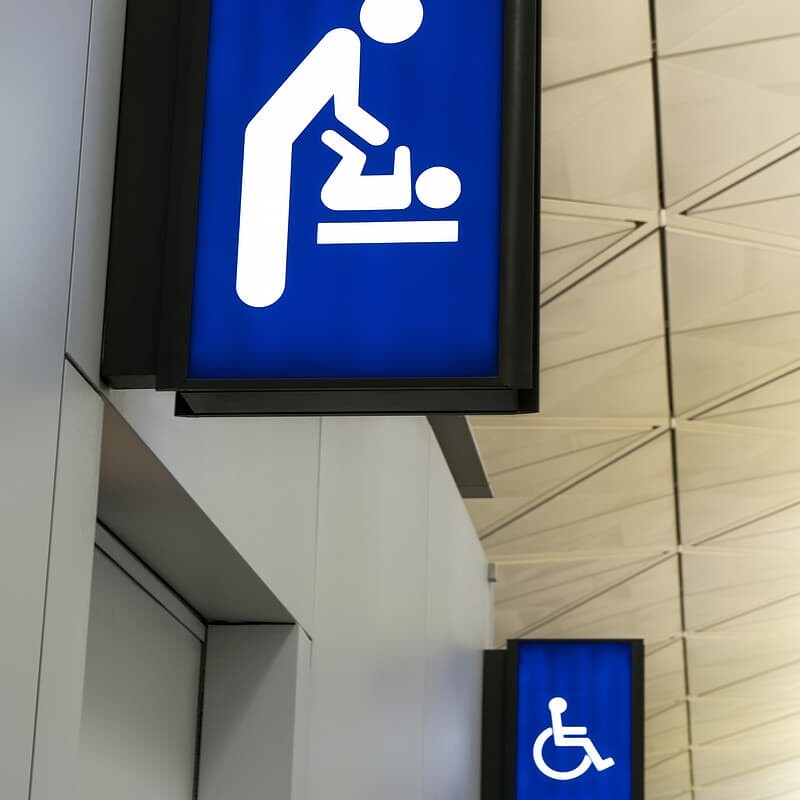
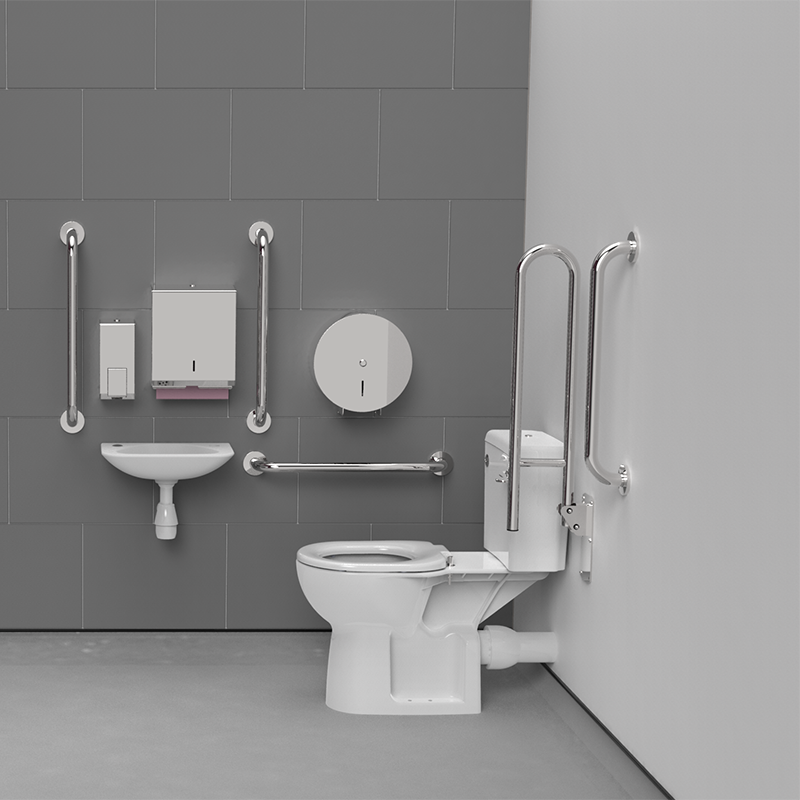
Those who do rely on such public facilities will be familiar with the kind of fixtures and fittings that make a difference: wider doors and cubicles to accommodate wheelchairs. Ambulant toilet grab rails, Braille signage and dispensers set at a more convenient height.
However, those responsible for providing accessible washroom facilities can always do more, a good example being the retailer B&Q, the BBC reports.
It has agreed to introduce stoma-friendly toilets at its stores in response to a campaign by Tony Beckinsale, a colostomy bag user from Bristol.
Among the new features of the lavatories will be door hooks for clothing and bags, a shelf on which medical supplies can be placed on and a mirror to make it easier for stoma bag users to see what they are doing.
Are ‘Invisible’ Disabilities Often Overlooked in Toilet Provision?
The campaigner said a stoma bag is an “invisible disability”, adding: “If people can’t see that there’s a disability, they don’t think one exists.”
Other campaigners for more facilities for stoma bag users include Traitors star Mollie Pearce. She said she had endured accidents when she had not been able to access the right facilities because they had closed, a common problem with retailers.
Of course, stores will be constrained by their opening and closing times, but that issue could be aided by more appropriately-equipped public washrooms, as well as in places that open later when the shops are shut, such as pubs and restaurants.
If public washrooms are in short supply due to vandalism or the decisions of cash-strapped councils, that will place more emphasis on what the private sector can provide.
In the case of one seaside town, an appeal has gone out to businesses to let the public use their facilities to help tackle this shortfall.
Scarborough Town Council has made the appeal, calling it a “community toilet initiative”. The scheme would see cafes, pubs and shops opening up their loos. They will receive “modest financial support, signage and inclusion in promotional materials” in return.
This may be very useful in providing general facilities for the townspeople of Scarborough and the many visitors to the town, but how well will they serve those with accessibility needs?
A likely answer is that many will be well equipped to at least some extent, in recognition of the obvious disabilities that many customers have.
However, the issue of some disabilities being “invisible”, as Tony Beckinsale described colostomy bag use, could mean they are left disappointed while wheelchair users requiring ambulant grab rails are well catered for.
Do The New Piccadilly Washrooms Meet All Accessibility Needs?
Consideration needs to be applied across a range of disabilities, especially when the opportunity presents itself in the shape of a comprehensive revamp of a public facility.
This has been happening in the City of Westminster, where £12.7 million has just been spent on upgrading public loos.
The Evening Standard highlighted the newfound status of one of them, the facilities at Piccadilly Circus Tube Station, as “London’s newest tourist attraction”.
Whether that moniker justifies the 80p cost for users may be debated, but the interior design is notable, featuring a Piccadilly Circus-themed mural by artist James Lambert.
However, the best aspect for some may be the praise heaped upon them by Gail Ramster, from the Public Toilets Research Unit at the Royal College of Art.
She noted the “beautiful, functional loos” met everyone’s needs, including those with accessibility issues. Hopefully, this will include any colostomy bag users paying a visit.
If one of them is Mollie Pearce, we can be sure she won’t accuse the designers of being “traitors” to the needs of people like her.
Related Posts