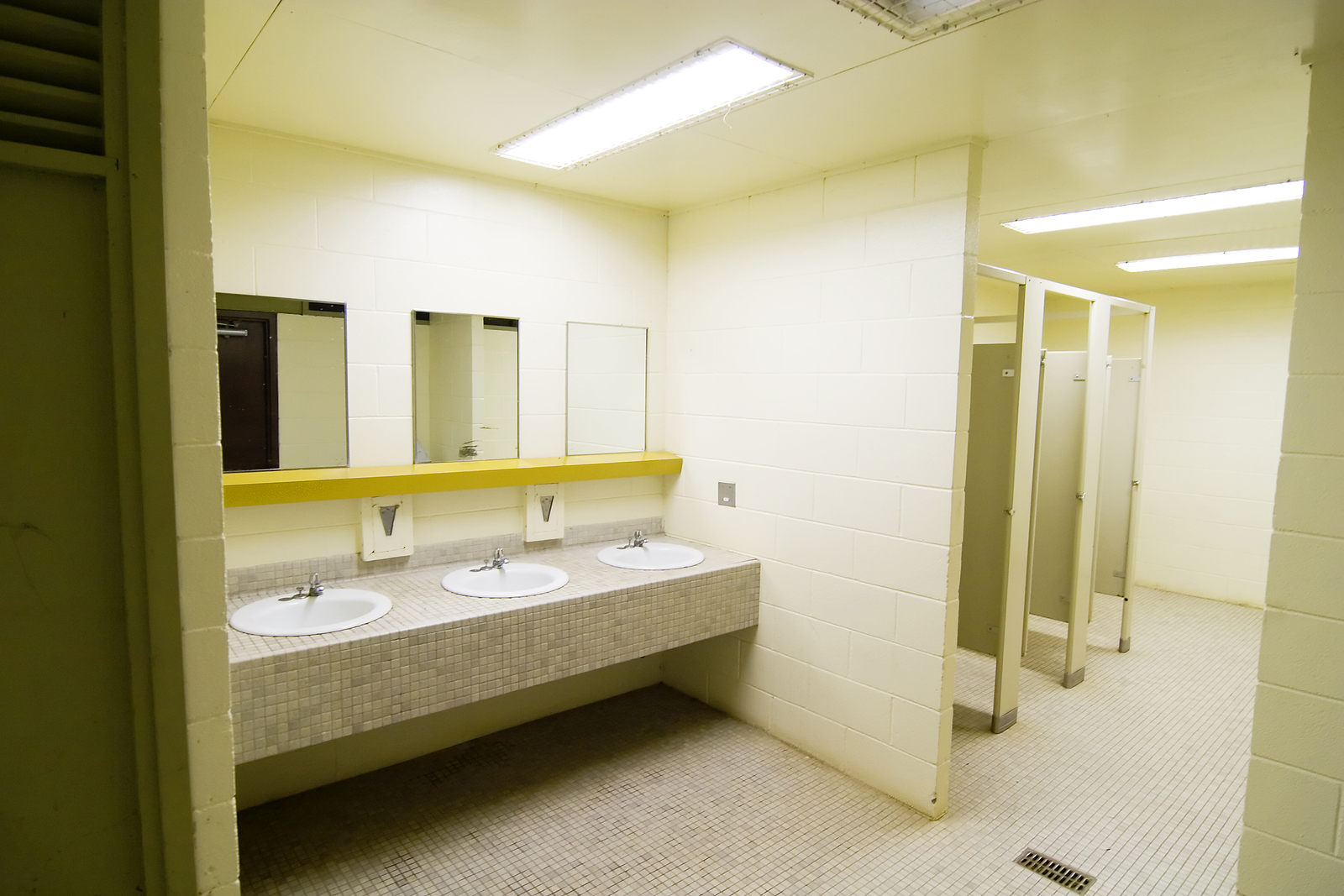

Despite frequent criticisms of the UK’s public transport network, especially outside London, it is still better in many regards than those of a lot of other countries. But facilities are not just about having lots of lines and stations. Washrooms matter as well.
Most mainline stations have some form of toilet facilities, with the most obvious exceptions being more remote stations or those that have very few trains, such as the ‘Parliamentary lines’ that get one train a week to keep them open. But metro systems are another matter.
A few miles from Greater Manchester’s own parliamentary line, the Metrolink tram system is largely lacking any such facilities, except where it interchanges with mainline stations.
However, this matters little in at least some of the street-running sections, as these are open platforms that can be accessed easily by people who have used nearby public or in-store facilities. The same is true for other surface-running tram systems across Britain.
Underground metro systems are another matter, as they operate with a ticket barrier system. In London, many Underground stations have no washrooms, but the situation is improving.
What Is London Doing To Improve Station Washroom Provision?
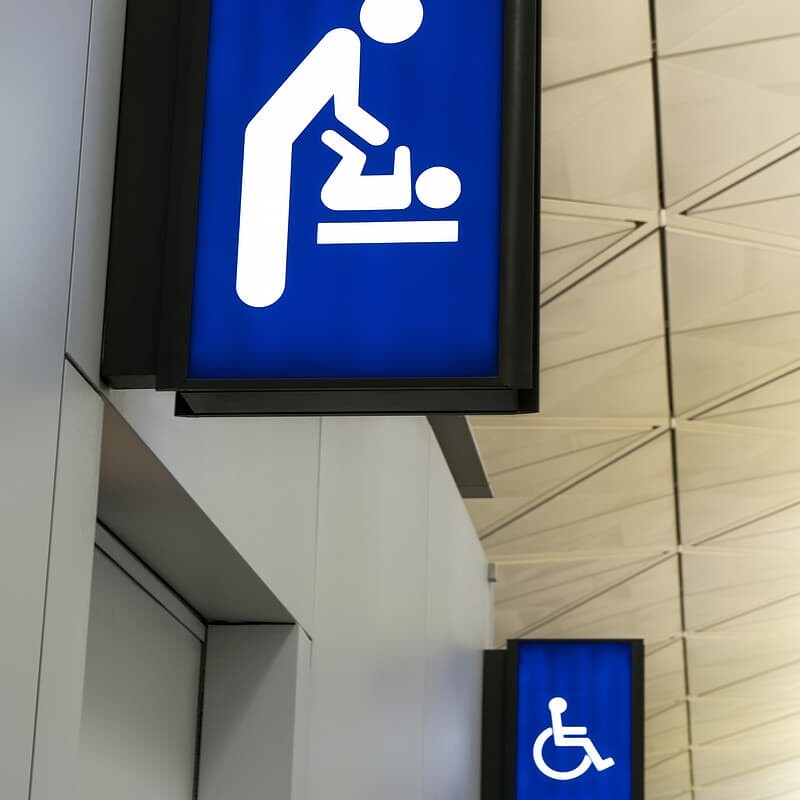
Transport for London was delighted to announce the introduction of another station washroom on the Tube network, with the latest results of a £3 million investment in facilities producing an accessible toilet, a gender neutral toilet and a baby changing area at Morden.
This was the latest station to get such facilities, with similar installations taking place recently at Clapton, Seven Sisters and White Hart Lane Overground stations.
Fitting such facilities may be harder in an underground setting, as it means retrofitting what may in many cases be an enclosed space. This is why made-to-measure toilet cubicles may be necessary.
Such a job has been accomplished at Morden and more stations will follow, both above and below ground. The stated aim is to ensure no passenger is ever more than 20 minutes from a toilet without having to change trains.
The next stations on the list for such work include the Acton Central and New Cross Gate Overground stations, as well as Amersham Tube station, although the latter is a surface station out in Buckinghamshire.
Elsewhere, work has been taking place to upgrade existing facilities at Tube and Overground stations.
However technically difficult it may be in some locations to fit underground washrooms, the attention being paid to user needs is a notable feature of these steps.
Why Do Accessible Washrooms Matter On Public Transport Networks?
Fitting accessible toilets is a step that acknowledges the particular needs of certain users:
- This fits with other measures to make the network more accessible, such as increased step-free access, something all Crossrail stations have, along with a growing number of Tube and Overground stations
- It acknowledges that people of limited mobility may find it harder to get to washrooms quickly
- A baby changing area highlights the fact that sometimes those of limited mobility are not disabled, but pregnant or carrying babies with them
TfL customer director Emma Strain said: “We know that for many people, not being able to access a toilet can be the difference between going out on the network or not,” adding that not doing so ”can have a disruptive and devastating impact on their lives.“
The provision of a gender-neutral toilet may raise some eyebrows, as some may see that as a response to the heated debate about issues of gender identification and who can use which facilities.
It may be that a gender neutral washroom solves that issue at a stroke, but on a simple, practical level, it also provides a solution to the lack of space that would permit different facilities assigned to male and female categories.
Can Other Cities Match London’s Efforts To Add Accessible Washrooms?
The challenge may be laid down to transport systems across the country. Outside London, not much is underground, bar the Glasgow Subway and a few central stations on the Tyne & Wear Metro and Merseyrail systems, but passenger needs remain.
However, while all 15 stations on the Glasgow Subway are fully accessible and step-free, they are rather lacking in washroom facilities. The Metro is in a better situation as most of the subterranean stations link to mainline rail or bus stations with washrooms.
Even so, the standard being set in London will be something others will increasingly need to follow as it is recognised that issues of accessibility and inclusion are not just about step-free access, crucial though that is.
As plans are developed for a possible underground system in Manchester and extensions to various mainline networks around Britain, the need to find space and use good design to fit bespoke facilities such as toilet cubicles and accessible facilities will have to be a priority.
Related Posts